HEROES

AT SCHOOL

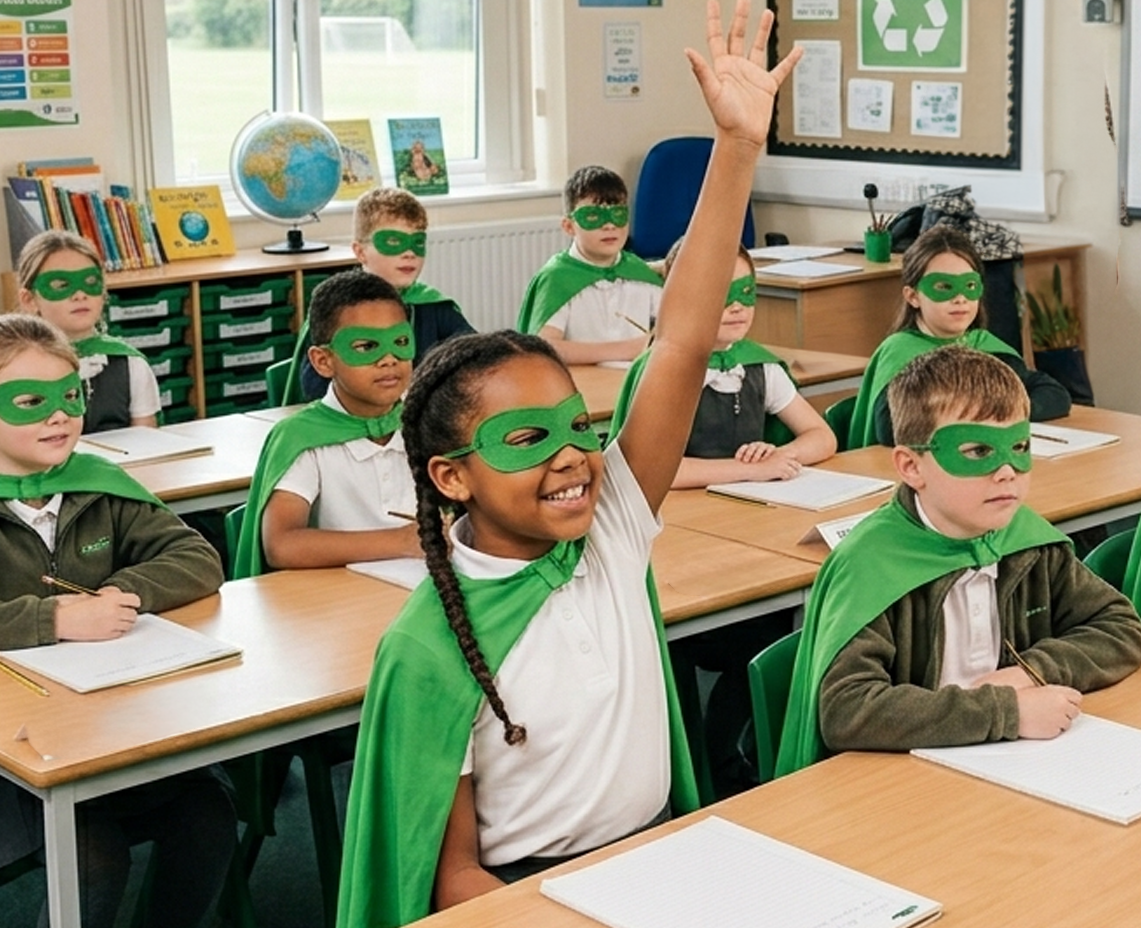
Creating the climate heroes of tomorrow

Creating the climate heroes of tomorrow

Schools have an important role to play in tackling climate change. As well as educating the next generation, they can reduce their own environmental impact, save money, improve biodiversity and become powerful examples of sustainability within their local communities.

In England, the Department for Education’s Sustainability and Climate Change Strategy set an expectation that all education settings should have a nominated sustainability lead and a climate action plan by December 2025. Climate action plans help schools identify opportunities to cut carbon emissions, reduce waste, improve biodiversity and make sustainability part of everyday decision-making. The Department for Education has also established a vision for the education sector to play a leading role in achieving a more sustainable future by 2030.

Campaigns like Lets Go Zero 2030 offer advice and information about changes you can make to buildings and supply chains. But for sustainability leads who want to do more to future proof their schools for hotter summers, motivate students and staff alike and create a more sustainable future, it’s hard to know where to start.

That's where Net Zero Heroes can help.

At Net Zero Heroes, we believe climate action should be positive, practical and empowering. Whilst investing in your schools infrastructure and energy supply is important, so is working with your students so that they understand the changes that are being made, learn that their actions matter and become the net zero heroes of the future.

We focus on action rather than anxiety and have put together some project ideas you can do with your students, and suggestions on how to future proof your facilities for a changing climate.

Future proofing against extreme weather

This year is the coldest summer for the rest of your life. Let that sink in. How hot did your classrooms get this summer? How comfortable was the exam hall for students sitting their SATs, GCSE’s or A-Levels? How many sports days had to be cancelled because temperatures were over 35C? It’s only going to get worse.

Schools need to prepare for hotter summers and more frequent heatwaves. When de-carbonising your school’s infrastructure, think about incorporating cool shelters and providing spaces where pupils and staff can escape excessive heat.

The ideal solution is one that doesn’t increase energy use such as:

  • A shaded outdoor learning area
  • A tree-covered section of the playground
  • A naturally ventilated classroom
  • Adding external shading to south facing windows

However, realistically, there may be a need for airconditioned spaces such as sports halls, libraries or large classrooms to be created to help manage prolonged heat waves in the future.

You may find that you can access grant funding to support the instillation of air conditioning units, especially if you can allocate roof space to solar panels to power the unit and help keep overall emissions down.

Be part of the solution

Calculate your carbon footprint

Preparing students for mass crop failures

As extreme weather increases the possibility of large-scale crop failures becomes increasingly likely. Teaching students how to grow their own food and support wildlife will build climate resilience and help young people develop the skills needed to create a more sustainable future. It also fits perfectly with the DfE’s expectation that schools develop climate action plans because it delivers action across multiple areas at once.

Instead of learning about sustainability from a worksheet, they can:

  • Grow food from seed to harvest
  • Observe seasonal changes
  • Learn where food comes from
  • Understand pollination and biodiversity
  • Reduce food miles
  • Develop practical gardening skills
  • Work together towards a shared goal
  • Improve wellbeing through time outdoors

If you don’t have the space for a school allotment, a small orchard is an easier, longer-term option that requires less maintenance.  Planting trees such as apple, pear, cherry and damson will not just produce seasonal food for years but can double as an outdoor classroom whilst offsetting any carbon emissions that the school is unable to eliminate.

Educate students on their carbon footprint

Helping students to understand the impact of their own day-to-day activities on the environment, and their hidden CO2 emissions, will empower them to make more sustainable choices, develop lifelong environmentally responsible habits, and recognise that even small actions can contribute to tackling climate change.

If students are over the age of 16, you can encourage them to become a net zero hero by calculating their personal carbon footprint here.

Teach students about
their carbon footprint

Set up a sustainability club

One of the most powerful ways to create lasting change is to put young people at the heart of environmental action.

When pupils are given the opportunity to identify local challenges and take practical action, they develop confidence, leadership skills and a sense of ownership over environmental issues. Climate action becomes something they do, not just something they learn about.

By making it a club, the students themselves can decide what projects they want to take on. Whether it’s a recycling campaign, planting project or something else.

The most successful projects focus on visible action and measurable outcomes. When pupils can see the impact of their efforts, they are more likely to stay engaged and inspire others to get involved.

Every project, no matter how small, helps students develop the skills and confidence needed to become the climate heroes of tomorrow.

Calculate your footprint

Get your group involved

Sustainable living blog